

MAINTENANCE GUIDE
Copper and Brass Care & Maintenance Guide
Copper sink care begins with understanding the natural behavior of copper and brass. These living materials respond to air, water, touch and everyday use, developing depth and tonal variation over time.
This guide covers routine cleaning, protective maintenance and finish-specific care for Monte Grande sinks, tabletops, fixtures and custom metal pieces.
Understanding Copper and Brass as Living Materials
Copper and brass are not static surfaces. Their appearance can change as they interact with moisture, food, air, cleaning products and the natural oils from touch.
On living finishes, it is normal for:
- The patina to deepen or change gradually.
- Water and daily use to create tonal variation.
- Food or acidic substances to produce temporary marks.
- Some marks to darken and blend into the evolving patina.
- Different areas of the same piece to age at different rates.
These changes are part of the material’s natural behavior and should not automatically be interpreted as damage or a manufacturing defect. Learn more about how copper patina evolves over time.
Everyday Copper Sink Care
Routine copper sink maintenance is simple when the surface is cleaned gently and residues are not allowed to remain in contact with the metal for extended periods.
Regular Cleaning
- Remove food and other residues after use.
- For copper sinks, use mild soap, water and a soft cloth or non-abrasive sponge.
- Rinse the surface to remove remaining soap.
- Dry with a clean, soft cloth to reduce water marks.
- For decorative copper or brass pieces, use a slightly damp cloth and dry the surface immediately afterward.
For a focused cleaning routine, read How to Clean a Copper Sink Without Damaging Its Patina.
What to Avoid
- Leaving food, soap, toothpaste or other residues on the piece.
- Prolonged contact with acidic liquids or foods such as vinegar, lemon, wine and tomatoes.
- Abrasive cleaners, metal pads, steel wool or hard sponges.
- Harsh household chemicals that are not intended for finished metal surfaces.
- Using metal polish before identifying whether the finish is living, polished or sealed.
- Allowing water or cleaning products to dry repeatedly on the surface.
Acidic substances can temporarily lighten or alter an unsealed patina. With continued use, the surrounding tones may gradually rebalance and blend with the changing surface.
Protective Care for Living Finishes
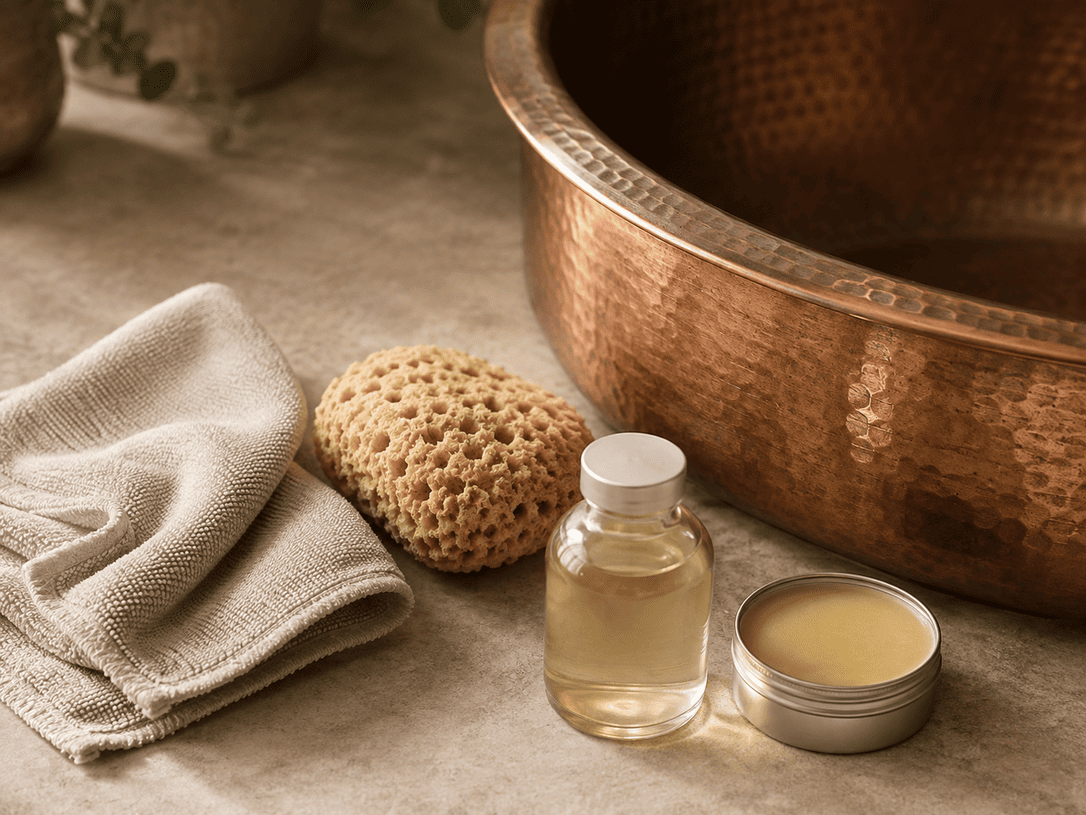
Selected living finishes can receive an additional protective layer through gentle, periodic care.
Beeswax
Apply a thin coat of beeswax with a clean, dry cloth. Use soft circular motions to distribute it evenly, then remove any excess.
Beeswax can provide a light protective barrier while allowing the natural character of the material to remain visible.
Olive Oil for Selected Finishes
A small amount of olive oil may be used to revive the tone of these Monte Grande finishes:
- Aged Brushed Copper.
- Aged Copper.
- Brown.
- Natural Classic.
- Rio Grande.
Apply only a small amount with a soft cloth and distribute it evenly. Do not apply olive oil indiscriminately to antique, polished or sealed finishes unless the treatment has been confirmed as appropriate for that specific surface.
Maintenance Frequency
Review the surface approximately once a month, or whenever the finish appears to be changing more quickly than expected. Maintenance should respond to the actual condition of the piece; it is not necessary to apply wax or oil every time the surface is cleaned.
Care by Surface and Finish
General cleaning principles apply to all pieces, but restoration and protective treatments vary according to the finish.
Aged Copper, Brown, Rio Grande and Natural Classic
Clean with mild soap, water and a soft cloth or sponge. Dry the surface after cleaning.
A thin layer of beeswax can be applied for additional protection. A small amount of olive oil may also be used to revive the warmth and depth of these finishes.
Natural color changes should be expected as the surface continues to interact with its environment.
Antique Green and Antique White
Use a slightly damp cloth, then dry the surface completely. A thin coat of beeswax may be applied gently when additional protection is needed.
Avoid aggressive rubbing, metal polishes or abrasive products, as these can disturb the distinctive antique surface.
Brushed Finishes: Aged Brushed Brass and Aged Brushed Copper
For routine care, use mild soap, water and a soft cloth or sponge. Dry the surface completely after cleaning.
When an unsealed brushed finish requires restoration:
- Apply a thin layer of water to the surface to reduce unwanted scratching.
- Use 400-grit wet/dry sandpaper with very soft circular movements.
- Clean the surface with water and a soft cloth.
- Dry completely.
- Apply a small amount of olive oil or a thin coat of beeswax when appropriate.
Important: Do not sand a sealed finish. Contact Monte Grande before attempting restoration when the surface treatment is uncertain.
Matte Finishes: Matte Penny and Matte Brass
Clean with mild soap, water and a soft cloth or sponge. Dry after cleaning.
When an unsealed matte finish requires restoration:
- Clean the surface with a damp cloth.
- Use a Scotch-Brite pad with soft, consistent linear movements.
- Clean the surface again with a damp cloth.
- Dry completely.
- Apply olive oil or beeswax only when appropriate for the finish.
Avoid circular or irregular rubbing, which may create an inconsistent texture.
Shiny Brass and Shiny Copper
Shiny copper and brass will naturally begin to patina if they are not sealed.
When the surface begins to lose its polished appearance:
- Use a copper or brass cleaner suitable for the material.
- Polish gently according to the product instructions.
- Apply a compatible, high-quality protective wax after polishing.
- Never use hard pads or abrasive cleaners.
Repeated polishing removes the naturally developing patina and should only be performed when maintaining a bright surface is the intended result.
Sealed Finishes
Sealed finishes are designed to reduce or slow some of the changes normally associated with living copper and brass surfaces.
For regular cleaning:
- Use mild soap, water and a soft cloth or sponge.
- Dry the surface after cleaning to reduce water spots.
- Apply a compatible high-quality wax only when recommended for the coating.
To protect a sealed finish, avoid:
- Abrasive cleaners.
- Metal pads and steel wool.
- Harsh chemical cleaners.
- Metal polishes that can damage the protective layer.
- Household cleaning products not intended for coated metal surfaces.
A sealed finish should not be described as permanently unchangeable. Its appearance can still be affected by use, scratches, chemicals, heat and environmental conditions.
Living Finishes vs. Sealed Finishes
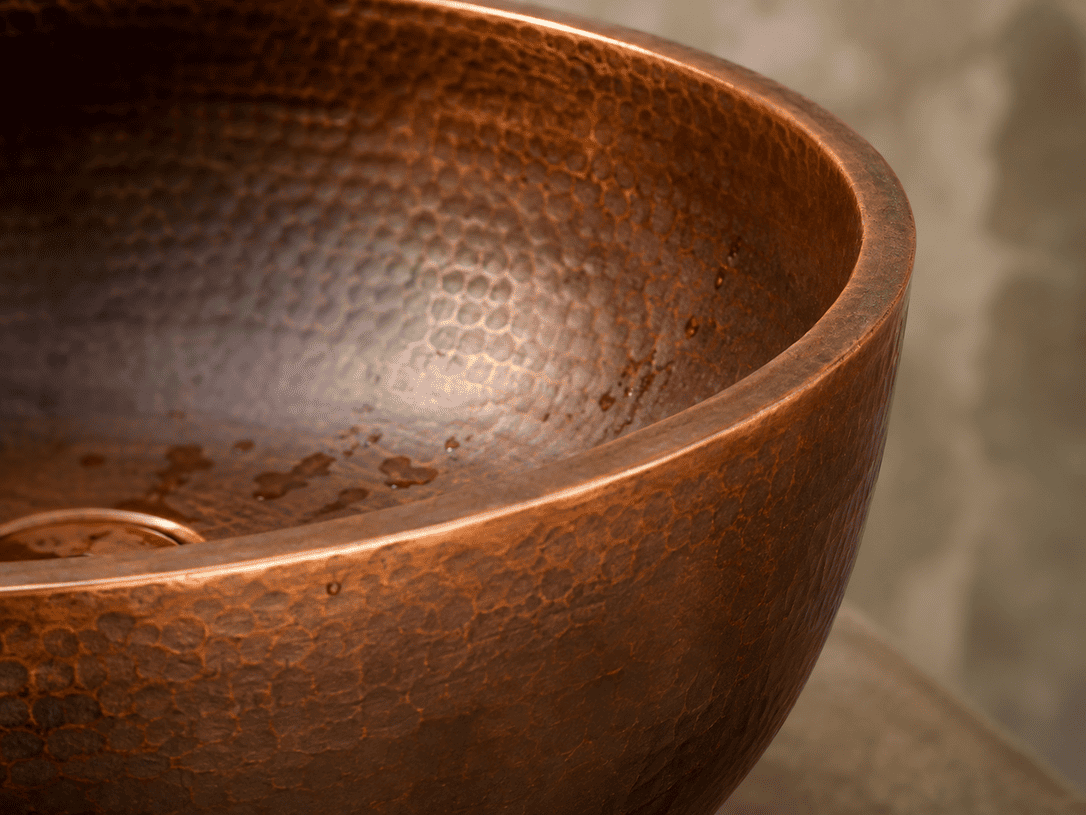
A living finish is intended to evolve. The color, contrast and tonal variation may change as the metal responds to use and its surroundings.
A sealed finish includes a protective coating intended to preserve the selected appearance for longer and reduce some interaction with the environment. It requires cleaning products and maintenance methods compatible with that coating.
Neither option is universally better. The appropriate choice depends on whether the project values natural evolution or greater consistency over time. Explore Monte Grande Patinas and Finishes.
Copper and Brass Care Questions
Are copper sinks hard to maintain?
No. Routine copper sink care generally requires mild soap, water and a soft cloth or sponge. The most important consideration is understanding that an unsealed copper surface will naturally change over time.
How often should a copper sink be cleaned?
Remove residues and rinse the sink regularly after use. Drying the surface can help reduce water marks. Protective care such as beeswax should be applied according to the condition of the finish rather than after every cleaning.
Can I use vinegar or lemon on a copper sink?
Prolonged contact with acidic products can temporarily alter or lighten an unsealed patina. Remove acidic residues promptly, rinse the surface and dry it with a soft cloth.
Why has my copper sink changed color?
Copper is a living material. Air, water, food, cleaning products and touch can all influence the patina. Uneven or changing tones are a normal part of this natural process.
Will a sealed copper finish remain unchanged permanently?
A sealed finish can reduce or slow some changes, but it does not make the surface permanently unaffected by chemicals, scratches, heat or everyday use.
Can I restore a brushed or matte finish myself?
Some unsealed brushed and matte finishes can be restored using the methods described in this guide. When the type of finish or coating is uncertain, contact Monte Grande before using sandpaper, abrasive pads or metal polish.
Need Help Identifying or Caring for Your Finish?
Because each surface, patina and protective treatment responds differently, the correct maintenance method depends on the finish applied to the piece. Share photographs and product details with the Monte Grande team before attempting an intensive restoration.
