

Copper is often chosen for its warmth, depth and unmistakable presence. But unlike surfaces designed to remain visually unchanged, copper continues to evolve long after a piece leaves the workshop.
Air, moisture, touch and everyday use gradually transform its color and character. This natural process, known as patina, creates a living finish—one that records time rather than resisting it. The result is not a perfectly uniform surface, but something more individual: a material that becomes increasingly connected to the space around it.
For Monte Grande, this evolution is part of copper’s beauty. A handcrafted piece is not meant to feel static or anonymous. It carries the mark of the artisan, the nature of the material and, eventually, the rhythm of the space where it lives.
What Is Copper Patina?
Patina is the natural surface transformation that occurs when copper reacts with its environment. Over time, the material can shift from bright copper tones into warmer browns, deeper chocolate hues, charcoal notes or, in certain conditions, blue-green tones.
This process is often misunderstood. Patina is not the same as damage. In many cases, it is part of the material’s natural identity and one of the reasons copper has been valued in architecture, interiors and handcrafted objects for centuries.
A living finish does not behave like a synthetic coating designed to look identical year after year. It responds to use, climate, air quality, water, touch and care. That response gives each piece a surface that cannot be fully replicated.
For homeowners, designers and architects, this means copper should be understood not only as a color or finish, but as a material with movement, depth and long-term character.
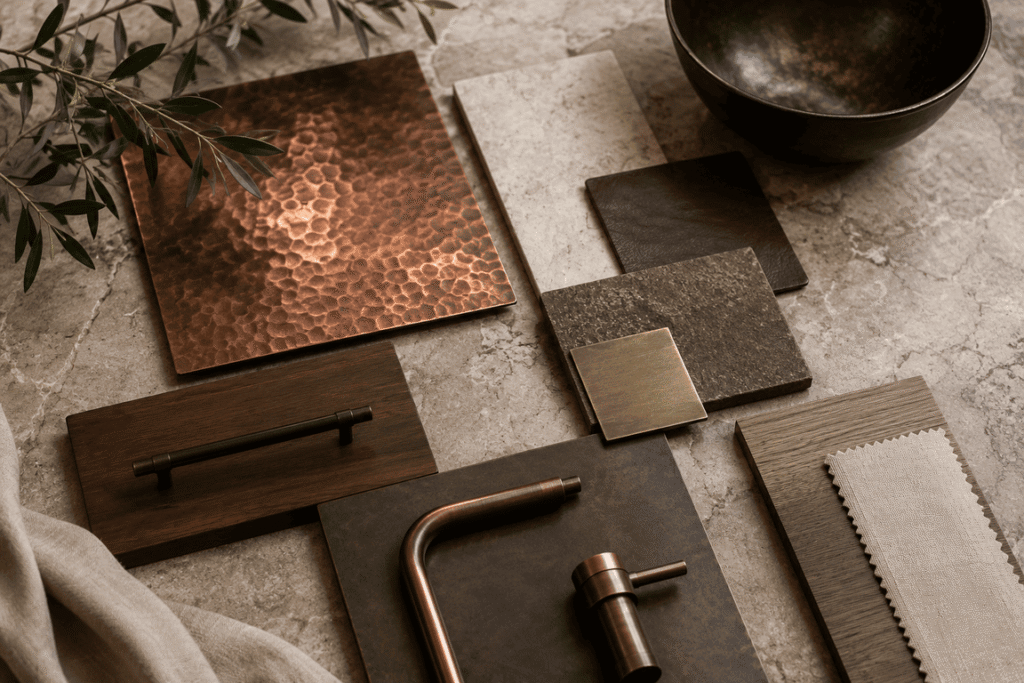
A Surface That Records Time
Some materials are appreciated because they stay the same. Copper is appreciated because it does not.
Every touch, drop of water, change in humidity and moment of use can leave a subtle trace. Over months and years, the surface begins to tell a quiet story. It reflects the rhythm of a kitchen, the atmosphere of a restaurant, the daily rituals of a home or the character of a hospitality space.
This is why copper belongs naturally beside other materials that age with dignity: stone, wood, leather, bronze and brass. These materials are not valued because they remain visually perfect. They are valued because they become richer, softer and more personal with time.
A living finish asks for a different way of looking. Instead of expecting complete uniformity, it invites attention to variation. Instead of resisting time, it allows time to become part of the design.
Why Copper Changes Color
Copper changes color because it is constantly interacting with the world around it. The transformation is gradual, and it does not happen in exactly the same way on every surface.
A new copper piece may begin with warm orange, rose or reddish tones. As it is exposed to air and daily use, the surface often becomes darker and more muted. Browns, deep bronze tones and charcoal areas can appear. In specific environments, especially where moisture, salts or exterior exposure are present, blue-green patina may develop over time.
The exact result depends on several factors:
- The original finish of the piece.
- The level of use.
- The amount of moisture in the environment.
- The type of water or cleaning products used.
- The presence of oils, acids or salts.
- The amount of air circulation.
- Whether the piece is used indoors or outdoors.
This is why two copper pieces made by the same workshop can age differently. Even when they begin with a similar finish, the environment completes the story in its own way.
No Two Patinas Are Exactly Alike
One of the most important things to understand about copper is that variation is not a flaw. It is part of the material.
A handcrafted copper sink, tabletop, hood or decorative surface may show subtle differences in tone, texture and reflection from the beginning. Over time, those differences become even more individual. Some areas may darken faster. Others may remain warmer. Edges, frequently touched surfaces or areas exposed to water may develop their own visual rhythm.
This individuality is especially important in handmade pieces. A handcrafted surface is not intended to look like a mass-produced object. Its value comes from the relationship between material, handwork and time.
For this reason, patina should not be understood as something to “fix” automatically. In many interiors, it is precisely what gives copper its depth and quiet sophistication.
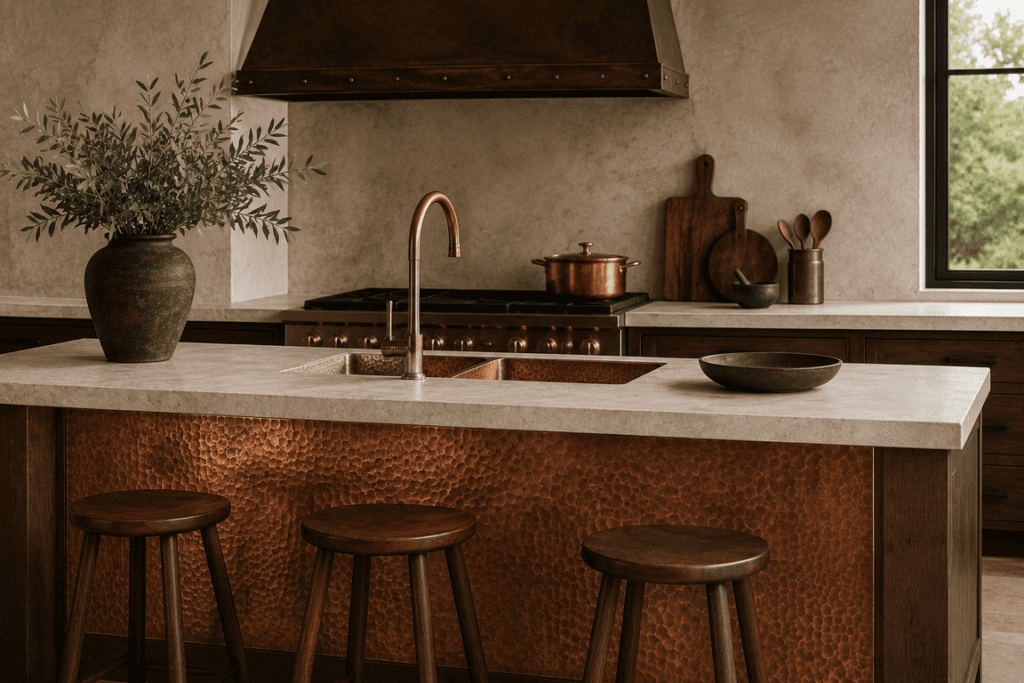
Patina in Kitchens and Interior Spaces
In kitchens, patina becomes part of the daily experience of the space. A copper kitchen sink may begin as a strong visual statement, but over time it becomes more integrated into the room. Its tone softens, its surface changes and its presence feels more lived-in.
This quality is especially valuable in refined residential interiors, where materials are expected to feel authentic rather than overly polished. A copper sink, range hood or tabletop can bring warmth to stone, wood, plaster, concrete or neutral cabinetry.
In hospitality interiors, copper can play a different but equally powerful role. Bar tops, tabletops, wall panels and custom metalwork can create atmosphere, depth and recognition. In restaurants, hotels and bars, materials are touched, seen and remembered. A living finish allows the space to gain character through use rather than lose it.
This is one of the reasons copper works well in both private homes and commercial environments. It can feel elevated without feeling cold. It can be expressive without feeling decorative in a superficial way.
For those exploring copper pieces for the kitchen, Monte Grande’s copper kitchen sinks offer a direct way to experience this material in a functional, everyday setting.
Living With a Living Finish
Living with copper does not mean treating it as fragile. It means understanding how it behaves.
For everyday care, copper generally responds best to simple, gentle routines. Mild soap, water and a soft cloth are usually enough for regular cleaning. Abrasive pads, harsh chemicals or aggressive cleaners can alter the surface in ways that feel less natural or less controlled.
Certain foods and liquids may temporarily affect the tone of the surface. Lemon, vinegar, salt, acidic foods or strong cleaning products can create lighter marks or changes in color. In many cases, these areas will gradually blend back into the surrounding patina as the piece continues to age.
The key is not to fight every variation. The key is to decide what kind of relationship you want with the material.
Some people prefer to maintain a more even appearance. Others enjoy the evolving character of a living finish. Both approaches are valid, but they require different expectations.
For more practical care recommendations, the Monte Grande Maintenance Guide can help users understand how to clean and care for handcrafted copper and brass pieces without compromising their natural character.
Preserving a Finish or Letting It Evolve
There is no single correct way to live with copper. The right approach depends on the piece, the space and the desired aesthetic.
Some interiors call for a more consistent finish. In those cases, care routines, protective approaches and careful cleaning habits can help preserve a more controlled appearance.
Other spaces benefit from allowing the material to evolve freely. In these interiors, patina becomes part of the visual language. The surface becomes more nuanced, more layered and more connected to daily life.
This decision is especially relevant for custom projects. A kitchen sink, tabletop, range hood, wall panel or bar top may require different expectations depending on how it will be used. A restaurant bar top, for example, may develop character more quickly than a decorative wall surface. A kitchen sink will interact with water every day. A tabletop will respond to touch, objects and cleaning habits.
Understanding this before choosing a finish helps create a better relationship between the client, the piece and the final space.
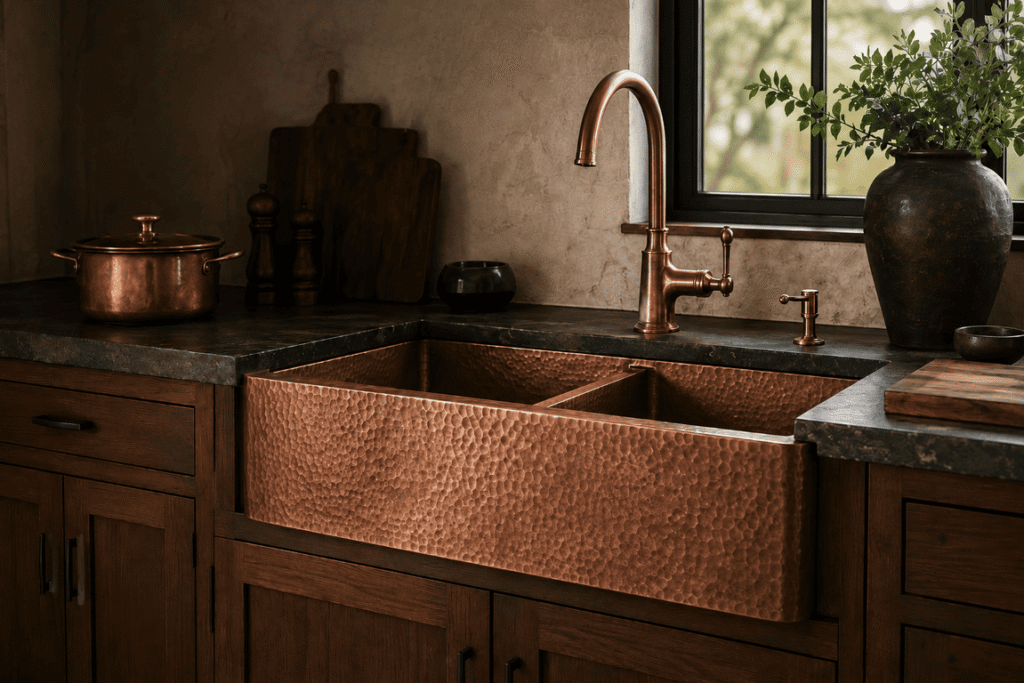
The Value of Materials That Age Well
In design, longevity is not only about durability. It is also about how a material continues to feel meaningful over time.
Copper has this rare quality. It can be strong, warm, expressive and adaptable. It does not need to remain visually frozen to retain its value. In fact, much of its beauty comes from the way it changes.
A well-made copper piece does not become less important as its surface evolves. It becomes more specific. More connected to place. More personal.
That is the quiet strength of a living finish. It allows a piece to move beyond perfection and into character.
For Monte Grande, copper patina is not an imperfection to hide. It is part of the material’s language: a record of craft, use, atmosphere and time.
Explore Monte Grande’s patinas and finishes to better understand the tones, textures and possibilities available for handcrafted copper and brass pieces.
Planning a custom copper or brass piece? The Monte Grande team can help define dimensions, finishes, materials and project details for residential, hospitality and custom spaces.
