

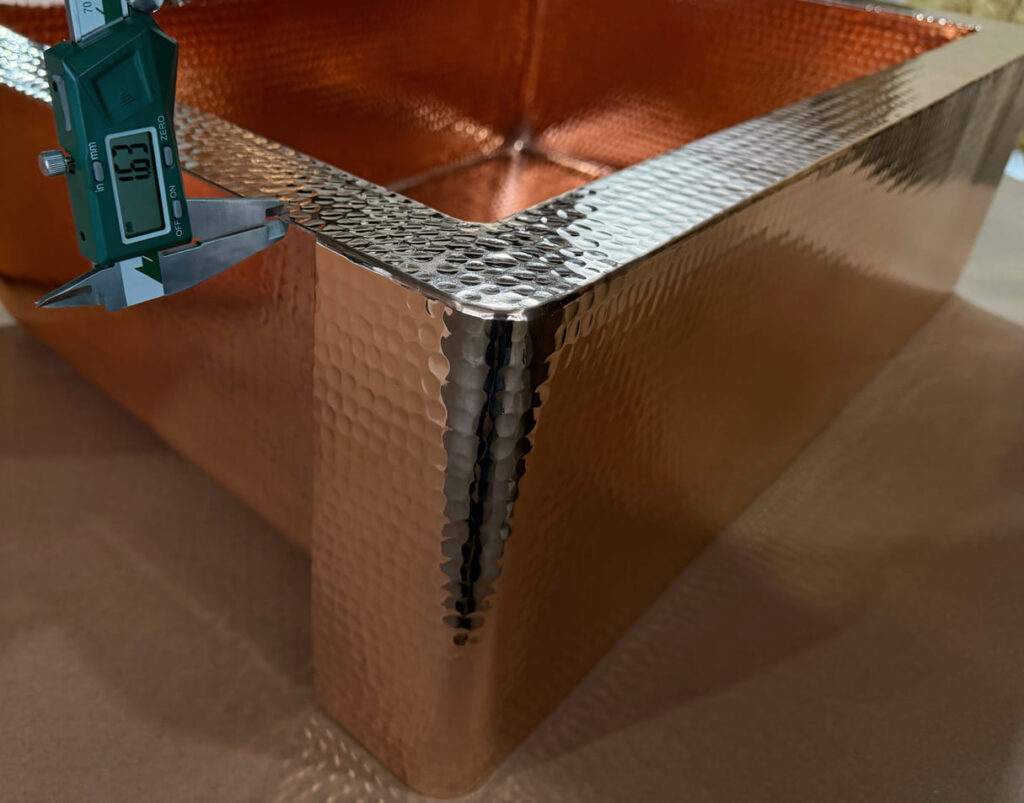
14 gauge is thicker than 16 gauge. For the sheet specifications used in Monte Grande kitchen sinks, 14 gauge is approximately 1.63 mm / 0.064 in., while 16 gauge is approximately 1.29 mm / 0.051 in.
The lower the gauge number, the thicker the metal. However, thickness alone does not determine the quality of a kitchen sink. Weight, dimensions, bowl depth, geometry, fabrication and installation also influence which gauge is appropriate.
This guide explains what kitchen sink gauge means, how 14 and 16 gauge compare, and when each specification may make sense for a handcrafted copper or solid brass sink.
Quick Answer: Is 14 Gauge Thicker Than 16 Gauge?
Yes. 14 gauge is thicker than 16 gauge. For the sheet specifications used in Monte Grande kitchen sinks, 14 gauge is approximately 1.63 mm thick, while 16 gauge is approximately 1.29 mm thick.
Because 14 gauge contains more material, a sink of the same dimensions will generally be heavier and more rigid. However, that does not mean 14 gauge is automatically better for every kitchen sink.
What Does Kitchen Sink Gauge Mean?
Gauge describes the nominal thickness of the sheet metal used to fabricate the sink.
One important detail is that the numbering works in reverse: 14 gauge is thicker than 16 gauge.
For the sheet specifications used in Monte Grande kitchen sinks:
- 14 gauge: approximately 1.63 mm / 0.064 in.
- 16 gauge: approximately 1.29 mm / 0.051 in.
The numerical difference may appear small, but additional material affects the finished weight, rigidity, handling and the way a piece can be formed during fabrication.
Gauge is therefore useful information, but it should always be considered together with the material and the complete sink design.
14 vs. 16 Gauge Kitchen Sink Thickness at a Glance
| Consideration | 14 Gauge | 16 Gauge |
|---|---|---|
| Approximate thickness | 1.63 mm / 0.064 in. | 1.29 mm / 0.051 in. |
| Weight | Heavier | Lighter than 14 gauge |
| Material presence | Greater material mass | Substantial with less overall weight |
| Fabrication | Requires more force and work to shape | Can provide greater flexibility for certain forms |
| Potential use | Oversized, deep or particularly demanding designs | Standard and custom kitchen-sink designs |
| Quality | Premium when properly designed and constructed | Equally capable of being premium when properly designed and constructed |
The most important line in this comparison is the last one.
Gauge alone does not determine quality.
The workmanship, geometry, material, welding, forming, support and intended use of the sink remain essential.
14 Gauge — Actual measured thickness: 1.63 mm
16 Gauge — Actual measured thickness: 1.33 mm
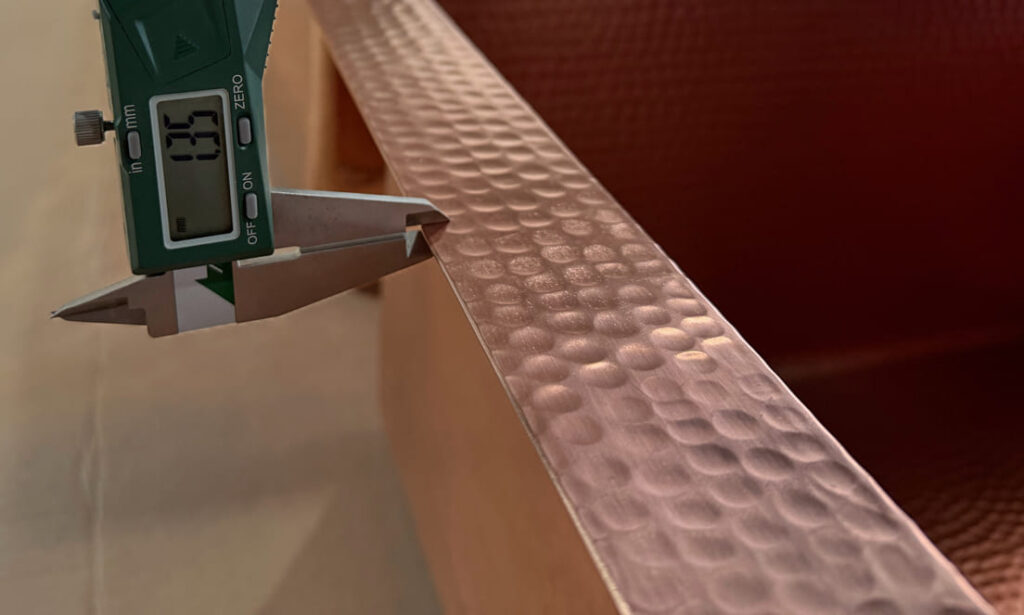
Actual thickness measurements taken from handcrafted Monte Grande copper sinks. Slight variations can occur due to material tolerances and fabrication.
When Does Monte Grande Use 14 Gauge?
Fourteen gauge provides additional material mass and rigidity. This can be beneficial when a sink becomes particularly large, deep or demanding from a fabrication standpoint.
Situations where 14 gauge may be considered include:
- Oversized kitchen sinks.
- Large farmhouse or apron-front sinks.
- Extra-deep basins.
- Wide workstation sinks.
- Designs containing broad surfaces where additional rigidity is beneficial.
- Projects where the client specifically prefers a heavier construction.
- Certain demanding residential or commercial applications.
However, an oversized sink does not automatically require 14 gauge.
The complete geometry still matters. Bowl depth, bends, corners, workstation ledges, apron dimensions and the way the piece is formed all influence the final recommendation.
Fourteen gauge should therefore be understood as a fabrication option rather than a universal upgrade.
Its additional weight can create a particularly substantial physical presence, which may be desirable for certain projects or simply preferred by the client.
When Is 16 Gauge the Right Choice?
Sixteen gauge should not be understood as a compromise in quality.
It is the standard gauge commonly used by Monte Grande for kitchen sinks and remains a thick, substantial material for a properly fabricated handcrafted piece.
Depending on the design, 16 gauge may offer an appropriate balance between material thickness, finished weight and fabrication flexibility.
It can be suitable when:
- The dimensions and geometry perform well with 16 gauge.
- A substantial sink is required without the additional weight of 14 gauge.
- The piece includes shapes, corners or transitions that benefit from a different balance of thickness and workability.
- The sink falls within standard kitchen or farmhouse proportions.
- The workshop recommends it for the particular design.
A carefully formed, hammered, welded and supported 16-gauge sink can provide the material presence expected from a premium handcrafted product.
The important question is not simply “Which gauge is thicker?” but rather “Which gauge is appropriate for this particular sink?”
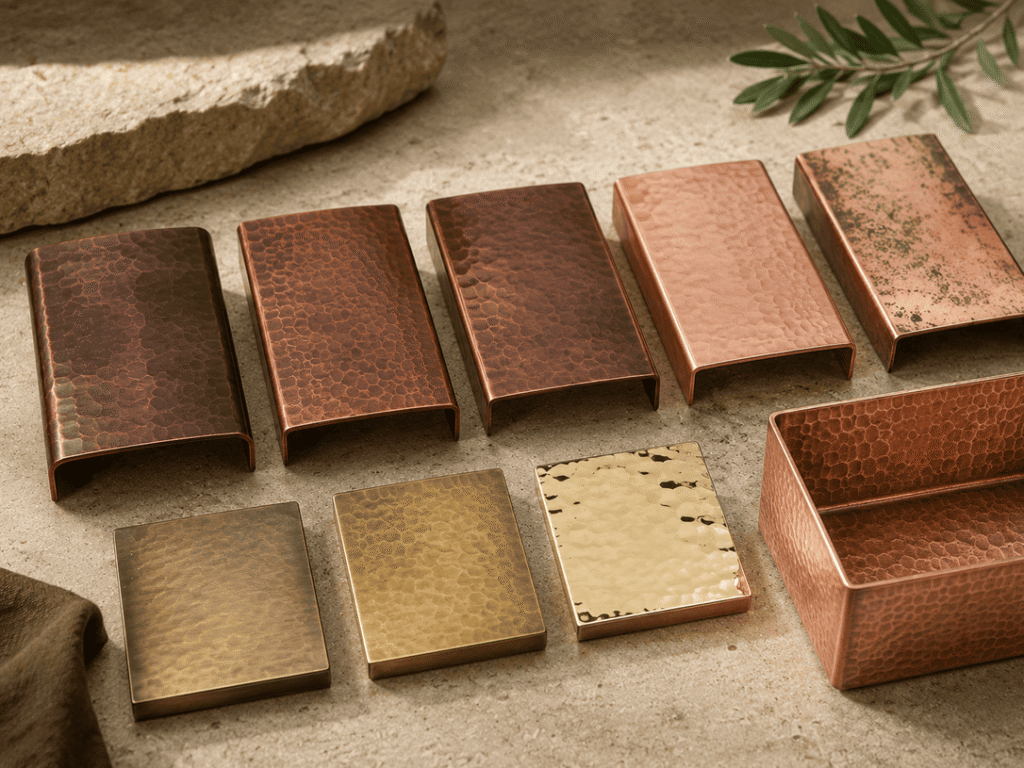
Does the Same Gauge Mean the Same Thing in Copper and Brass?
Gauge describes nominal sheet thickness, but copper and brass should not be treated as identical materials simply because two sheets share the same gauge.
Copper and brass have different material compositions and fabrication characteristics.
Brass is a copper-zinc alloy, and its specific composition and temper can influence characteristics such as forming, hardness and surface behavior.
This is also reflected in material standards: copper sheet and brass sheet are covered by separate specifications rather than being treated as a single material category.
For a custom sink, that means two sheets described by the same nominal gauge are not necessarily identical in the way they behave during forming or in the character of the finished piece.
Solid Brass Is Different From a Brass-Colored Sink
Monte Grande brass sinks are fabricated from solid brass sheet rather than stainless steel with a brass-colored surface treatment. When comparing gauges, it is therefore important to confirm both the thickness and the actual base material of the sink.
Explore Monte Grande’s solid brass kitchen sinks or browse our handcrafted copper kitchen sinks.
Does a Thicker Sink Perform Better?
Thickness matters, but sink performance depends on the complete piece.
A poorly designed or fabricated 14-gauge sink is not automatically superior to a carefully engineered and properly installed 16-gauge sink.
Other factors include:
- Overall sink dimensions.
- Bowl depth.
- Bowl geometry.
- Corner design.
- Hammered or smooth construction.
- Quality of forming.
- Weld quality.
- Rim construction.
- Drain construction.
- Material and temper.
- Cabinet and countertop support.
- Installation method.
- Intended residential or commercial use.
Hand hammering, bends and other formed areas also contribute to the structural character of a sink.
This is why evaluating gauge without considering fabrication can create an incomplete picture of quality.
For a handcrafted sink, the thickness of the original sheet is only one part of how the finished piece is constructed.
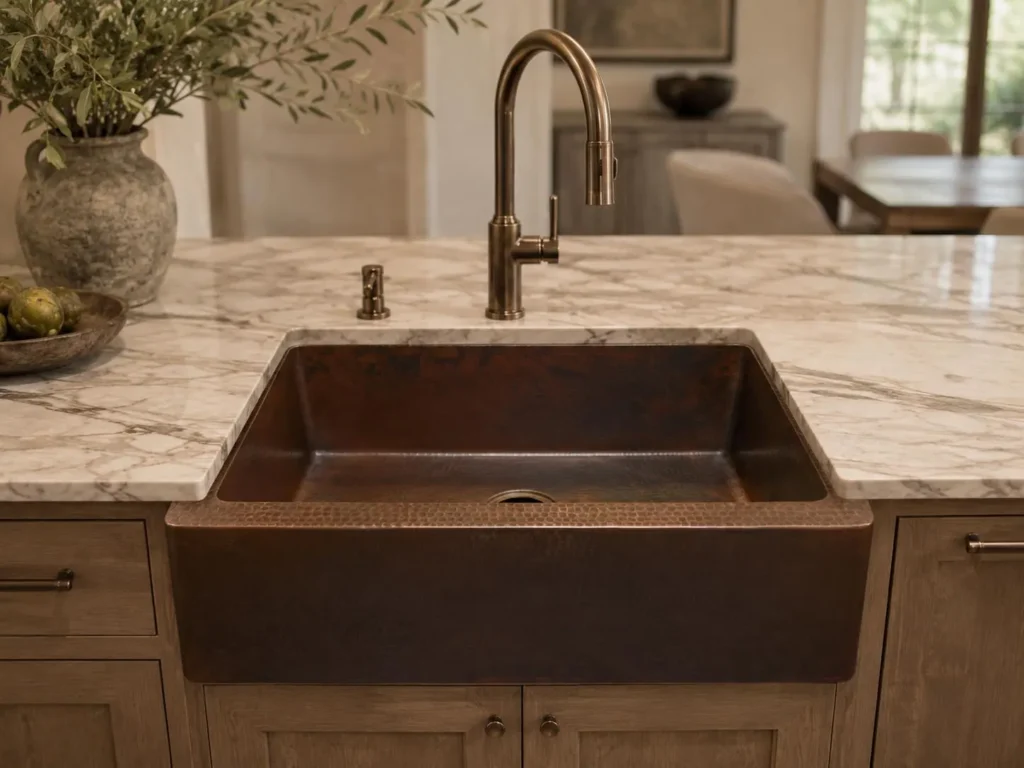
Does Gauge Affect Sink Weight and Installation?
Yes.
If two sinks have the same dimensions and are made from the same material, the 14-gauge version will generally contain more material and therefore weigh more than its 16-gauge counterpart.
As an approximate Monte Grande reference, one Undermount Copper Kitchen Sink configuration can weigh around:
- 16 gauge: approximately 14.5 kg / 32 lb.
- 14 gauge: approximately 18 kg / 39.7 lb.
These weights are approximate and can vary according to dimensions, geometry and fabrication details.
The difference becomes increasingly relevant as sink dimensions grow.
A larger or heavier sink may require additional consideration during handling and installation, and the final sink weight should always be communicated to the installer.
For undermount and farmhouse installations, the sink should be properly supported by the cabinetry rather than relying solely on adhesive or the countertop.
Because installation requirements vary with sink type and project conditions, detailed installation decisions should be coordinated with the installer and the actual finished piece.
For additional guidance, see Monte Grande’s Installation Guides.
How Should You Choose Between 14 and 16 Gauge?
Rather than beginning with the assumption that one gauge is universally better, start with the sink itself.
Consider 14 Gauge When:
- The sink is oversized or particularly deep.
- The design benefits from additional material mass.
- Large surfaces would benefit from additional rigidity.
- The project has demanding dimensions or geometry.
- A particularly heavy and substantial construction is specifically desired.
- The workshop recommends it after evaluating the design.
Consider 16 Gauge When:
- The sink dimensions and geometry perform well with 16 gauge.
- A substantial handcrafted sink is desired with moderately less overall weight.
- The design includes forms that benefit from the balance between thickness and workability.
- The sink falls within a standard or custom configuration that does not require additional material mass.
- The workshop considers it the appropriate specification for the piece.
For custom work, the best decision should come from evaluating the complete design rather than selecting gauge independently.
Gauge Is One Part of a Handcrafted Sink
The material itself is only the beginning of a handcrafted kitchen sink.
Its final character comes from the relationship between sheet thickness, dimensions, forming, hammering, welding, surface treatment, geometry and installation.
This is also why two sinks with the same nominal gauge can feel very different once completed.
A thoughtful specification should consider how all of those elements work together.
For many Monte Grande kitchen sinks, 16 gauge provides an excellent balance of thickness, weight and fabrication flexibility. For larger or particularly demanding pieces, 14 gauge can provide additional mass and rigidity where the design benefits from it.
Neither specification should be selected only because one number appears more premium than another.
The objective is to choose the material thickness that supports the design, proportions and intended use of the finished sink.
Frequently Asked Questions
Is 14 Gauge Better Than 16 Gauge for a Kitchen Sink?
Not automatically. Fourteen gauge is thicker and heavier, but both 14 and 16 gauge can be appropriate for a premium handcrafted sink. The correct choice depends on dimensions, geometry, material, fabrication, installation and intended use.
Is a 16-Gauge Copper Sink Thick Enough?
Yes. Sixteen gauge is a substantial specification when the sink is properly designed, fabricated, supported and installed. It is commonly used by Monte Grande for handcrafted kitchen sinks.
Are Copper and Brass Gauges Measured the Same Way?
They can share the same nominal gauge thickness under the sheet specifications used for the sinks, but copper and brass remain different materials with different compositions and fabrication characteristics. Gauge should therefore be considered together with the actual material specification.
Is a Solid Brass Sink Different From a Brass-Colored Sink?
Yes. A solid brass sink is fabricated from brass sheet. A brass-colored sink may instead be stainless steel or another base material with a decorative brass-colored surface treatment.
How Do I Know Which Gauge My Custom Sink Needs?
The complete sink should be evaluated before choosing the gauge. Dimensions, bowl depth, geometry, installation method, material and intended use all influence the appropriate specification.
